
Dark skies of West Norfolk
Terry Parish
Two eclipses for the price of one this month. Both are partial but welcome phenomenon that are easy to observe given clear skies or, at least, some breaks in the clouds.
The first, a partial solar eclipse is on the 12th August. It occurs low in the WNW just before Sunset. Start time is 6.15pm; maximum (91%) coverage of the Sun by the Moon is 7.11pm, and it ends at 8.04pm.
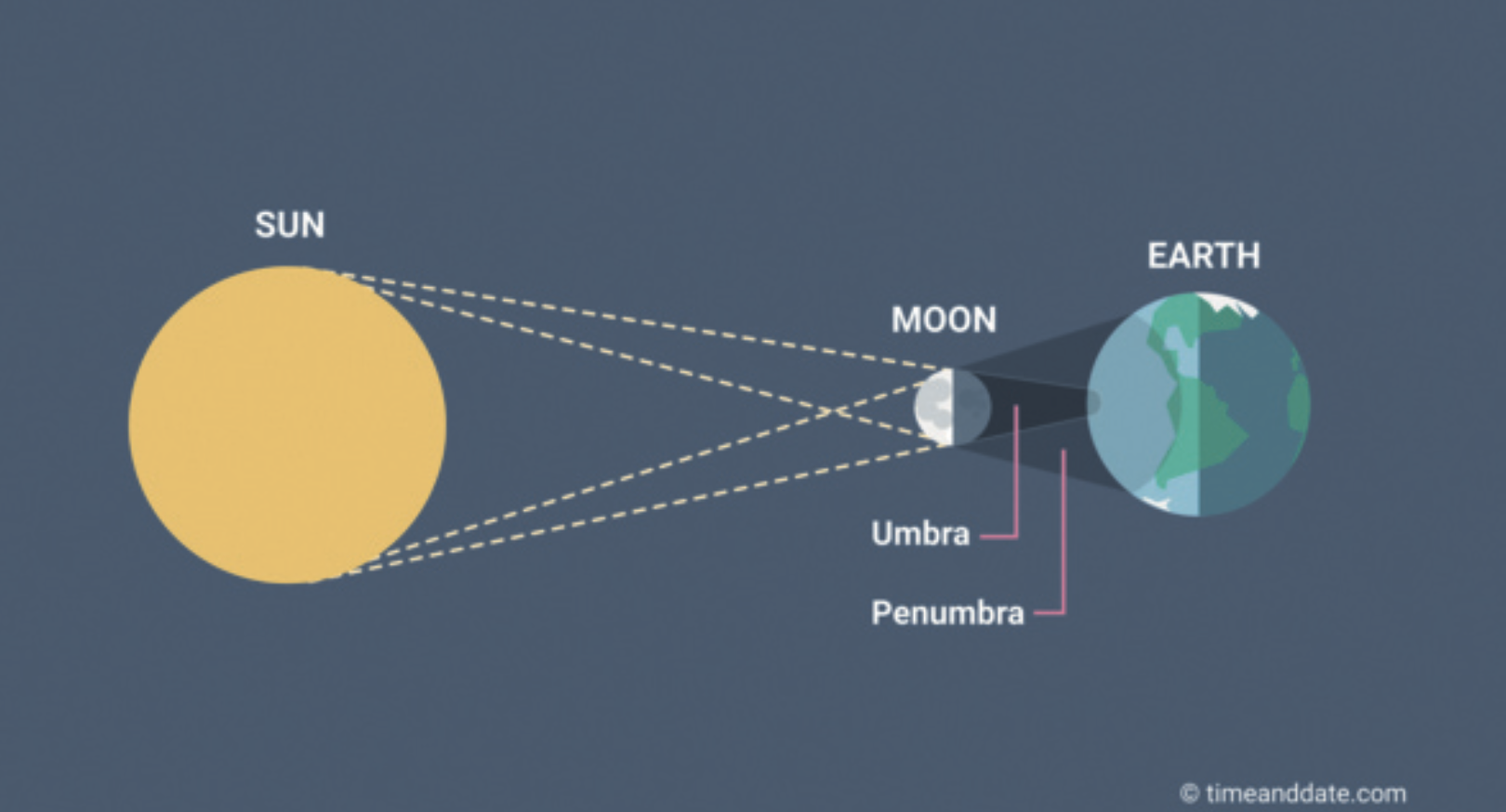
Solar eclipse. We will just enter the edge of the umbra so will have a partial eclipse.
A website, Time and Date, provides full information of times, what to expect and why it happens and it has pages for different locations including King’s Lynn and West Norfolk District. Just Google and use AI to find it.
Like many of you, my view is likely to be at least partially blocked by trees or buildings. Look out a better position before the 12th. I think I will go up to the Heacham Chalk Pit.
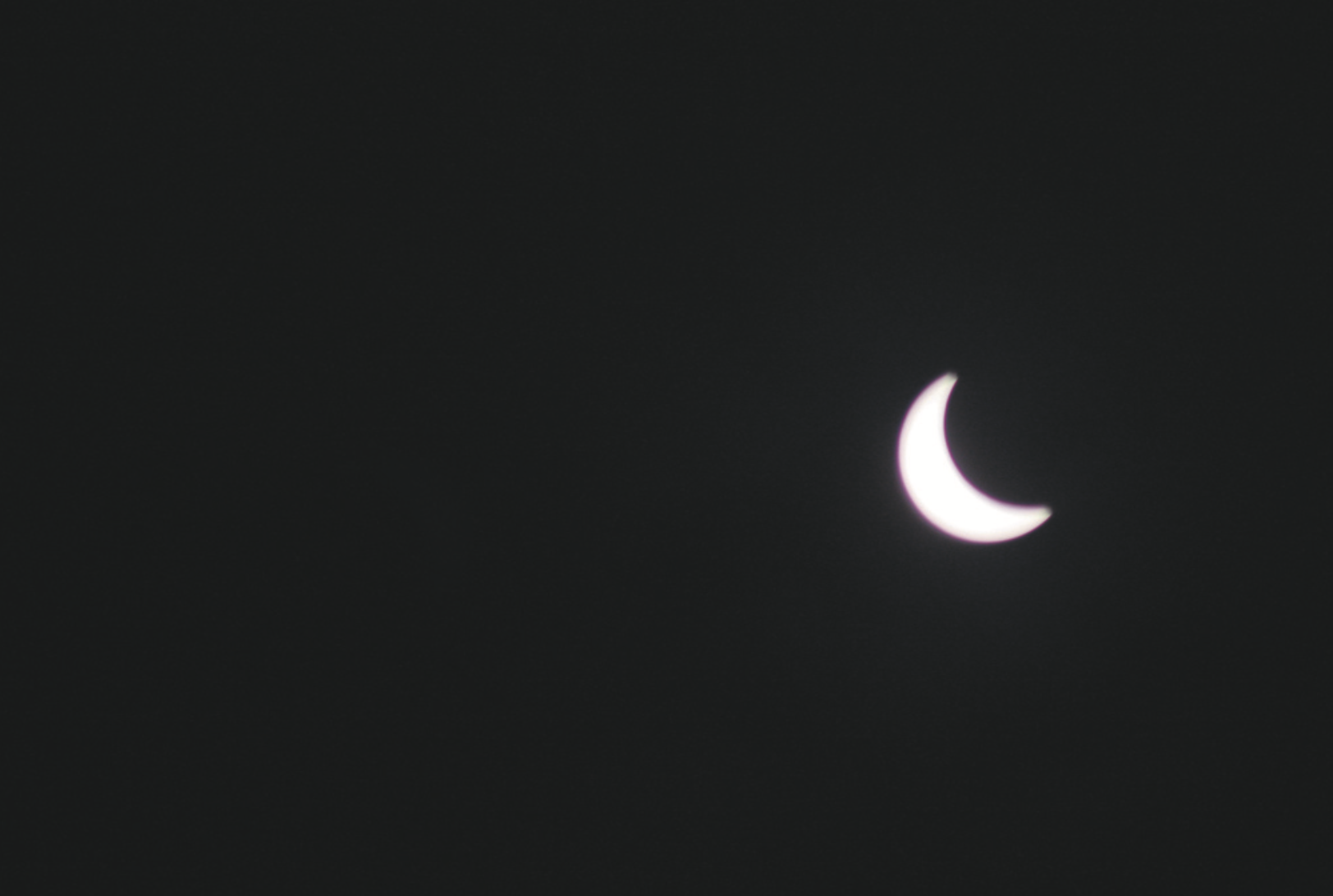
Heacham March 20th 2015. Solar partial eclipse underway. At maximum, it too had around 90% of the Sun eclipsed by the Moon. Parish
It is advised that you do not try and look directly at the Sun and you certainly must not use standard optical instruments. Last month I recommended getting eclipse glasses and you should still be able to order some on line up to a few days before the event. In the old days, welders’ glasses or several layers of black and white film negatives were recommended. Best of luck getting hold of them.
I have eclipse glasses, eclipse binoculars, and devices to fit on either end of a telescope but you don’t need any of them if you a prepared to watch the eclipse by projection.
The simplest way is to use two pieces of white card. Cut a rectangular hole, say 3cm square, in the centre of one. Tape a piece of aluminium cooking foil over the hole but don’t let the tape go over the centre. Use a pin to make a small hole in the centre of the foil. Use by putting your back to the Sun. Hold the cards apart, the one with the pinhole towards the Sun. Adjust the distance to see an image of the Sun on the plain white card.
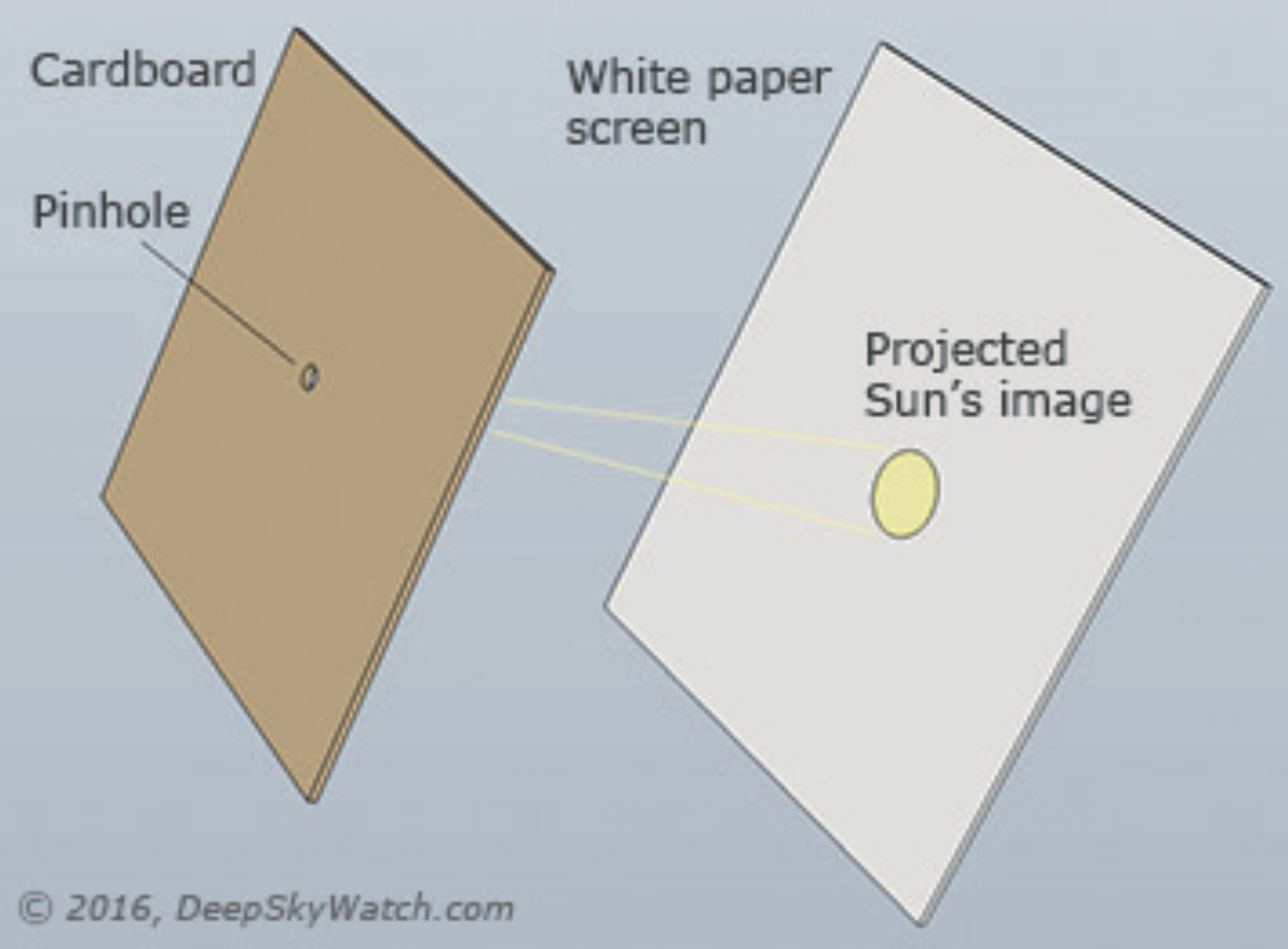
You can be more sophisticated and make your two cards oppositeends of a box (shoe box sized or so). Cut out a third to half of the bottom of the box. With your back to the Sun, hold the box just above your head, pinhole towards the Sun, look at the ‘screen’ through the hole in the bottom of the box.
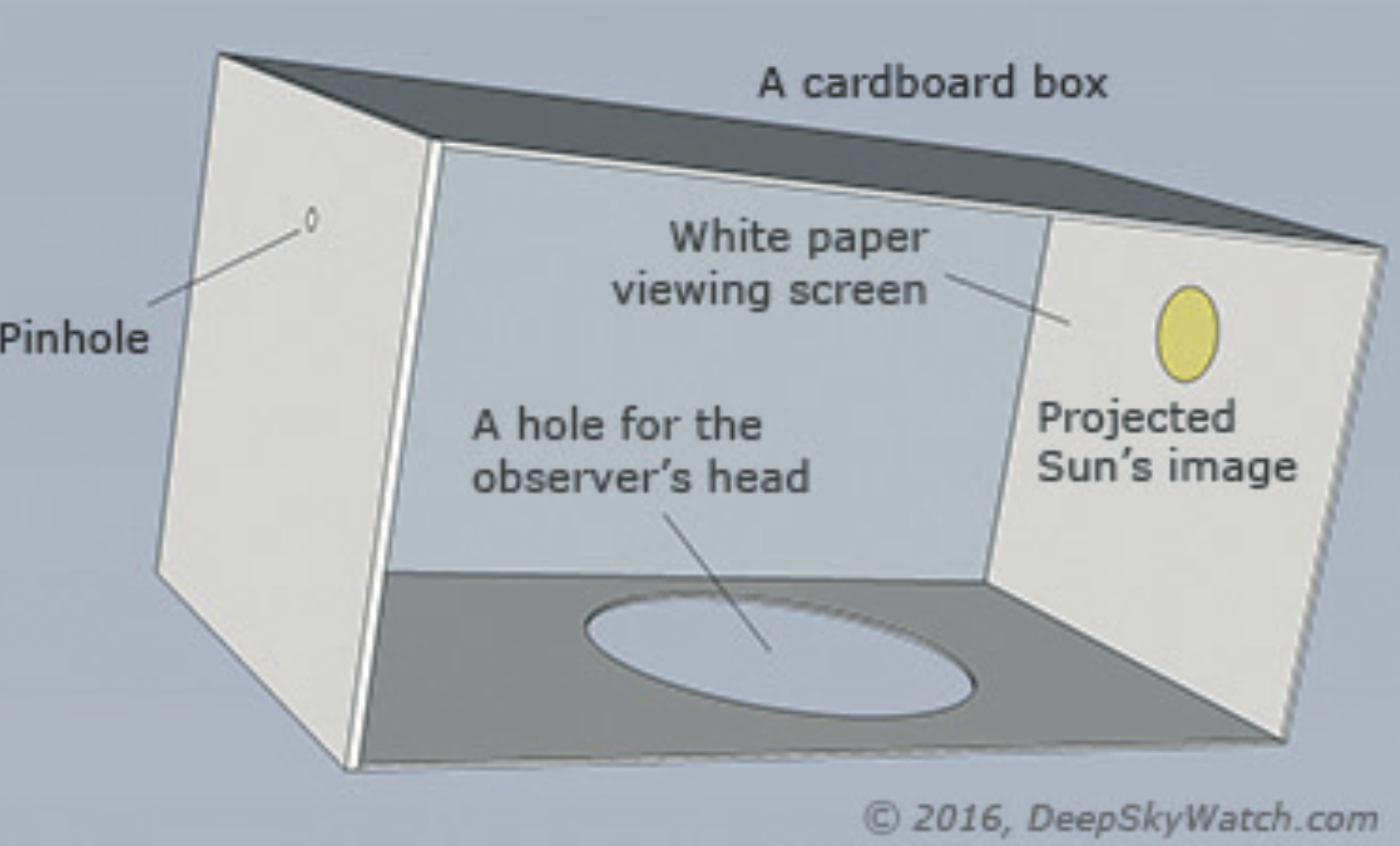
You don’t have to make it big enough for your head but it might be fun.
Or you can just use a colander. Hold it in front of a white card and move it about. You will see multiple images of the eclipse.
More ideas on line.
If you want to be scientific, note the time, to the second, when the eclipse starts and ends. Estimate when maximum coverage occurs and time that too. Take note of anything strange that happens in the natural world. I don’t think there will be much as it is not a total eclipse which fools birds and insects, but you never know until you look.
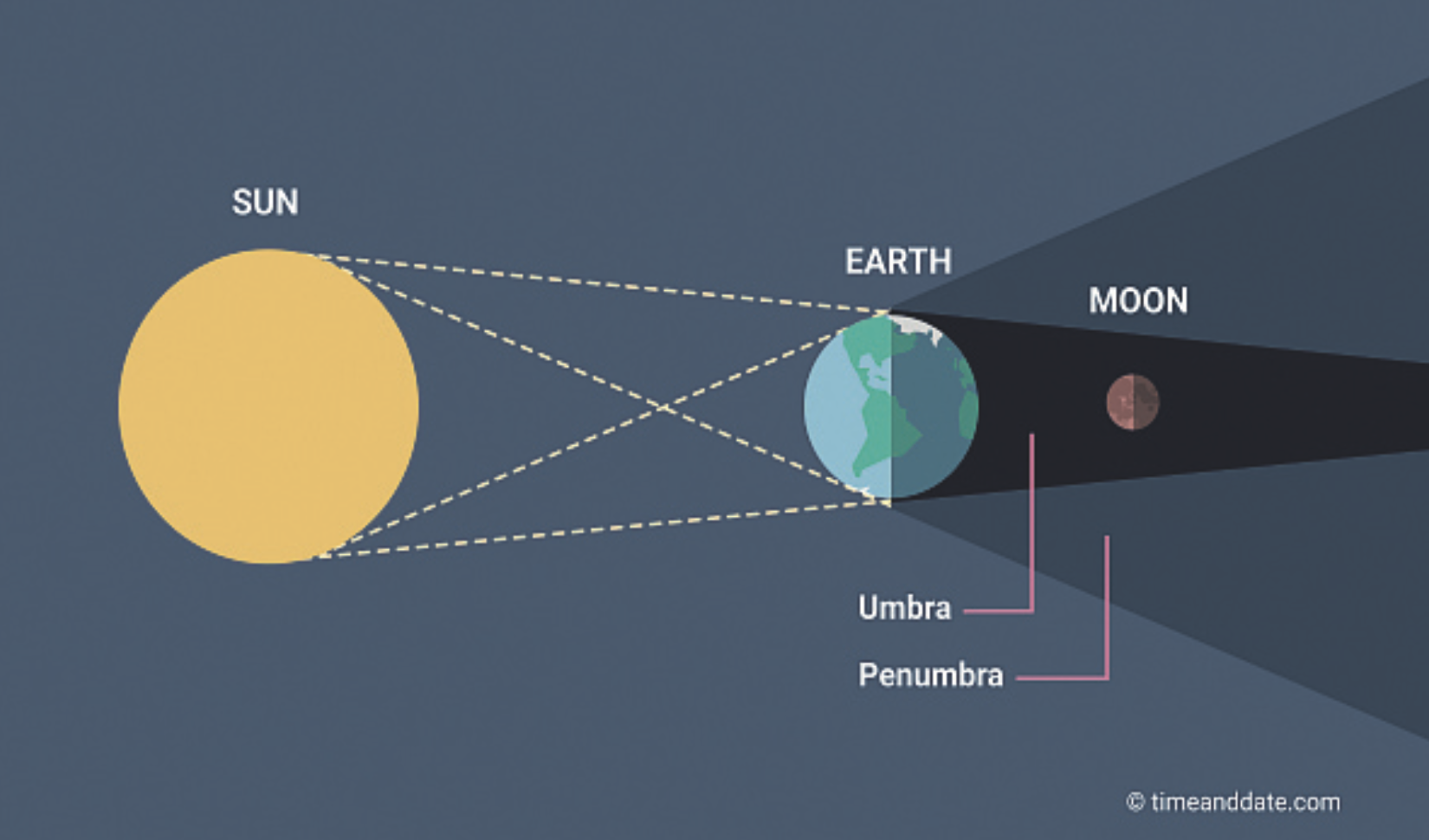
On the 28th there is a partial eclipse of the Moon, 93% covered by the Earth’s shadow. You will have to be a little keen to observe this as it happens in the early hours.
The Moon enters the Earth’s penumbra, half shadow, at 2.23am and the umbra, full shadow, at 3.33am. the maximum eclipse is at 5.12am and the Moon should appear reddish orange. The Moon sets at 6.15am before the eclipse has finished.
The Moon will be very low on the horizon and you will need to get down to Heacham beaches to see the eclipse. I might meet you there. Those of you in Hunstanton, head for the cliffs or promenade.
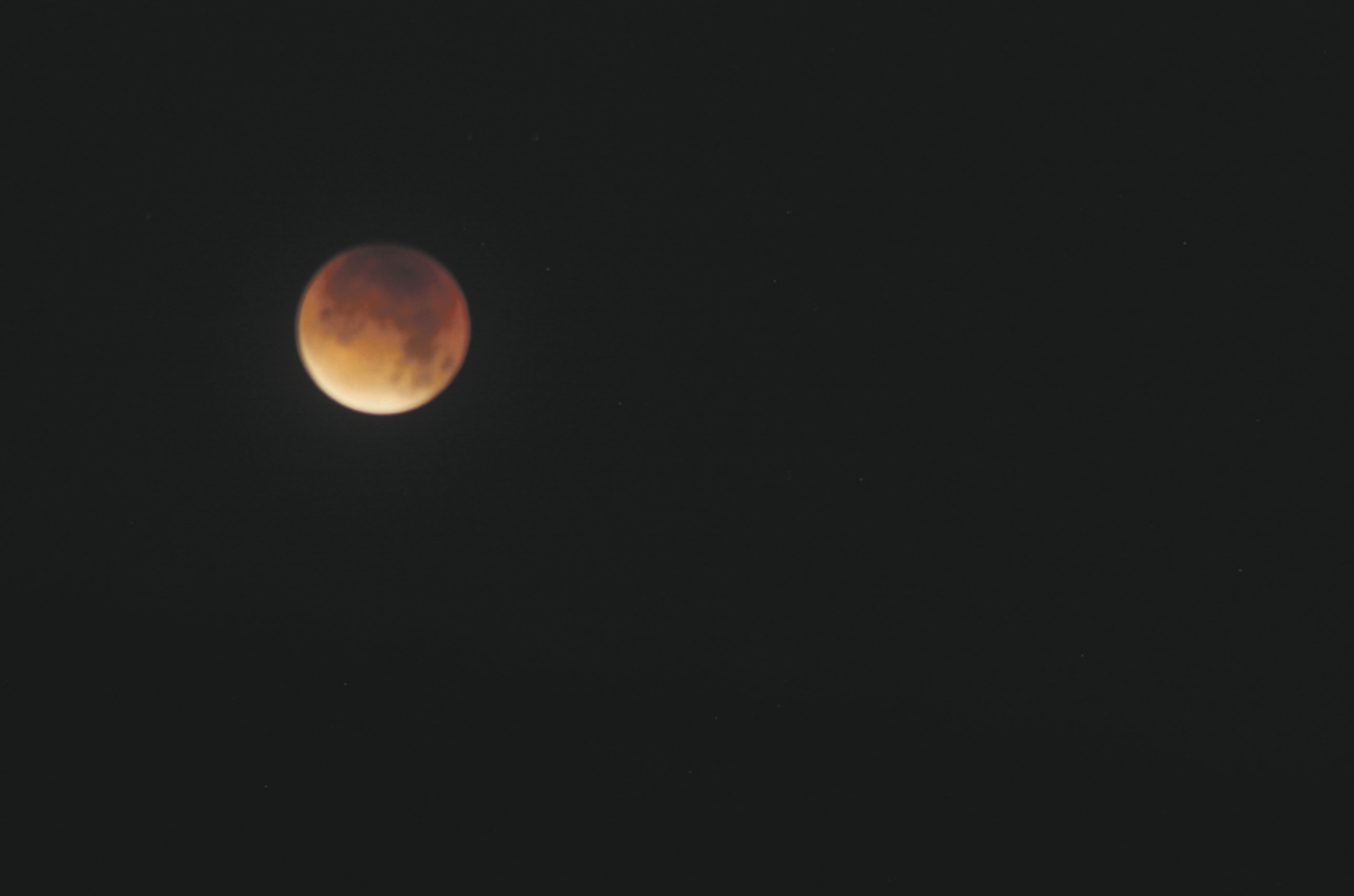
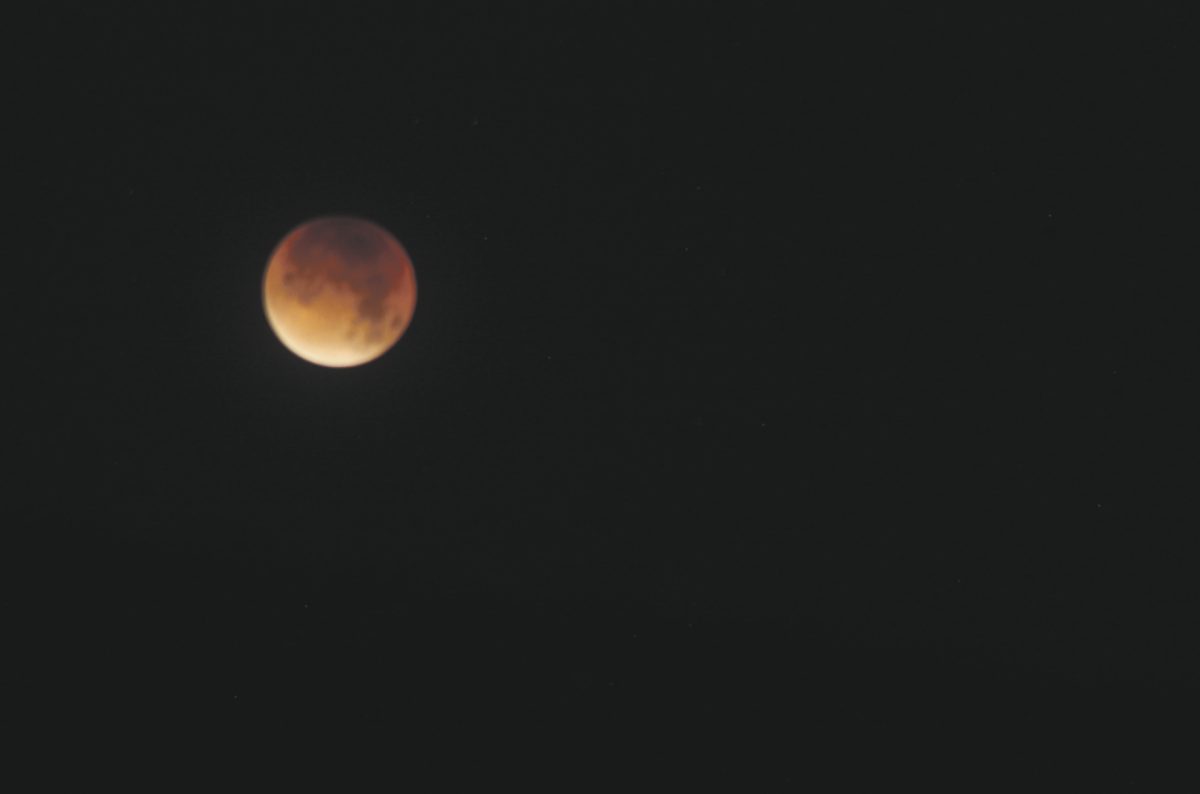
Heacham 28th September 2015. We saw a total lunar eclipse and the Blood Moon. This image is just before totality and similar to what you might see this month. Parish
The red colour is due to Earth’s atmosphere which scatters blue light but allows red light, of longer wavelength, to pass through whilst bending, refracting it, and illuminating the Moon. If we didn’t have an atmosphere then the Moon, where eclipsed, would become completely black but we wouldn’t be here to see it.
Not content with two eclipses, the month has the Perseid meteor shower, the best chance you have of seeing many meteors. The shower occurs over several weeks but the peak is on the night of the 12/13th. Look from darkness on the 12th, say 9pm, and stay up as late as you can. Accustom your eyes to the dark for 15mins and don’t spoil that acquired sensitivity by popping into a lit-up house. Red goggles are useful but I may have the only set in Heacham. Look vaguely north but meteor trails can appear in any direction. The Moon is well out of the way busy eclipsing the Sun. If there are patchy clouds look between the gaps.
There are 3 planets worth looking out for. Venus is still shining bright and gets brighter as the month progresses when it will have a magnitude of minus 4.6. Its phase is a little more than half. However it is low in the western sky and competes with the post sunset afterglow. The planet sets by 9.30pm and you will need a clear western horizon. On the 15th, Venus is at its greatest eastern elongation, easterly distance, from the Sun which will aid observation; It is also close to the Moon but, as this lies below Venus, it may have set before you can see both bodies together.
Saturn, the ringed planet, is a night object again and emerges in the east, at the beginning of the month, at about 11pm. However, it won’t be high enough to observe easily until around 1am, With a magnitude of +0.6, a reasonable eye will see it once you know where you are looking. Steady binoculars will be useful but, if you want to see the rings, some kind of telescope will be needed. As the month progresses, Saturn moves higher and inches towards the south; it will be high enough for observations by 10.30pm by the 30th. The Moon is just above it on the 4th and 30th.
Mars appears in the ENE from 3am early in the month, dimmer than Saturn with a magnitude of +1.2. The Moon is above it on the 9th. By the end of the month, it will have moved a tad further towards the east and be high enough for observation by 2.30am. If you stay up for the eclipse of the Moon and/or Perseid watching take the opportunity to find Mars.
I hope you at least see the partial eclipse of the Sun. If you want see it in totality then go to northern Spain or western Iceland but it will not be overhead. And catch, not literally, a few Perseids.

