
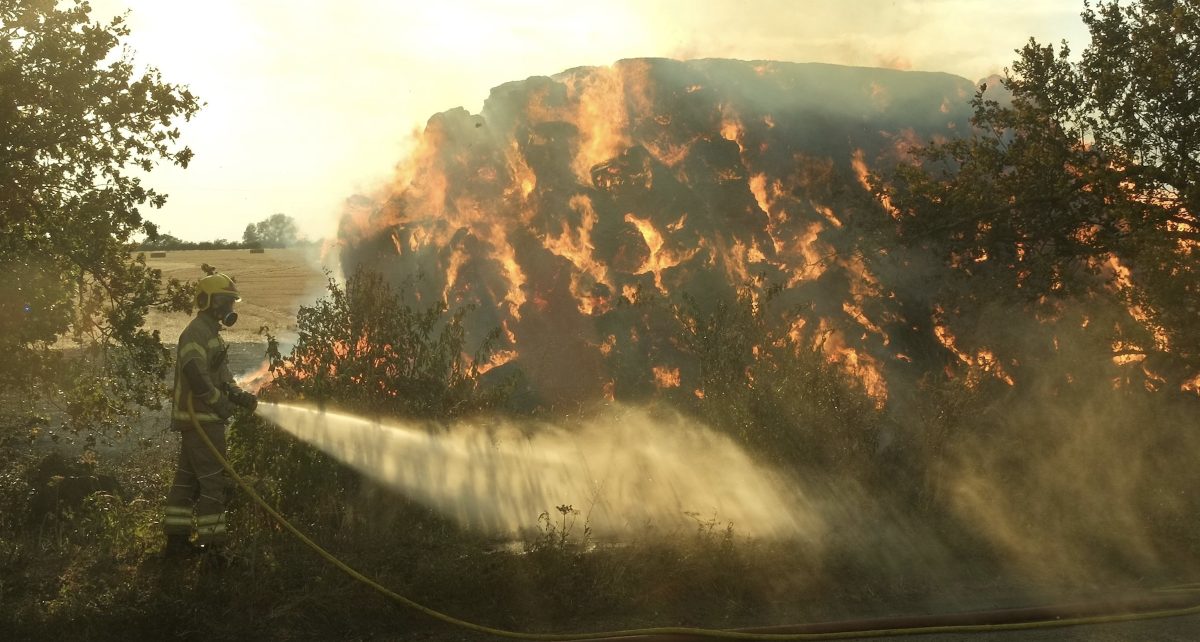
In just one day alone in July, Norfolk crews tackled dozens of wildfires. The heat and the prolonged dry weather, adding to the severity and complexity of the blazes.
"It's been horrendously busy," King's Lynn North's station manager Paul Edwards tells me, "The crews have been out non-stop for the last 6/7 weeks.
"From a physical point of view wildfires are very arduous, very hard work and they deplete our resources."
One, at Blackborough End, took crews days to deal with. The huge plumes of smoke closing the A47 - a mile of farmland and outbuildings were damaged.
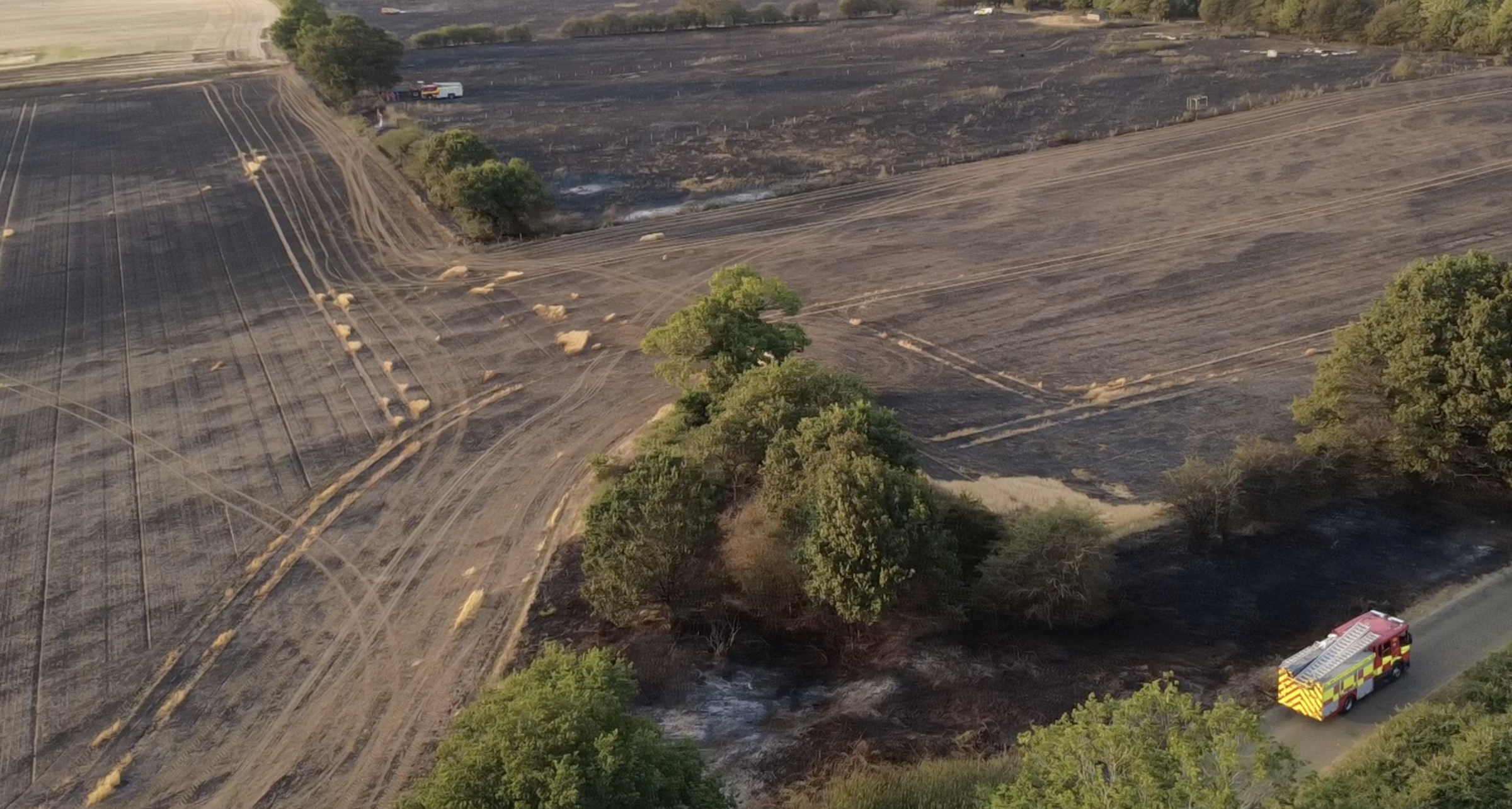
The aftermath at Blackborough End late July, image Norfolk Fire and Rescue Service (NFRS)
"The issues you have with Blackborough End is very, very quickly you have a rapidly developing fire, you also have the involvement of domestic properties nearby - of people.
"Normally the first 30 minutes are the most critical, it's so important for us to get an idea of what's going on, and how it could spread.
"Firefighters have their personal protective equipment, 30 degree plus heat, and running around trying to put out fires as well - it can become very, very exhausting, very quickly."
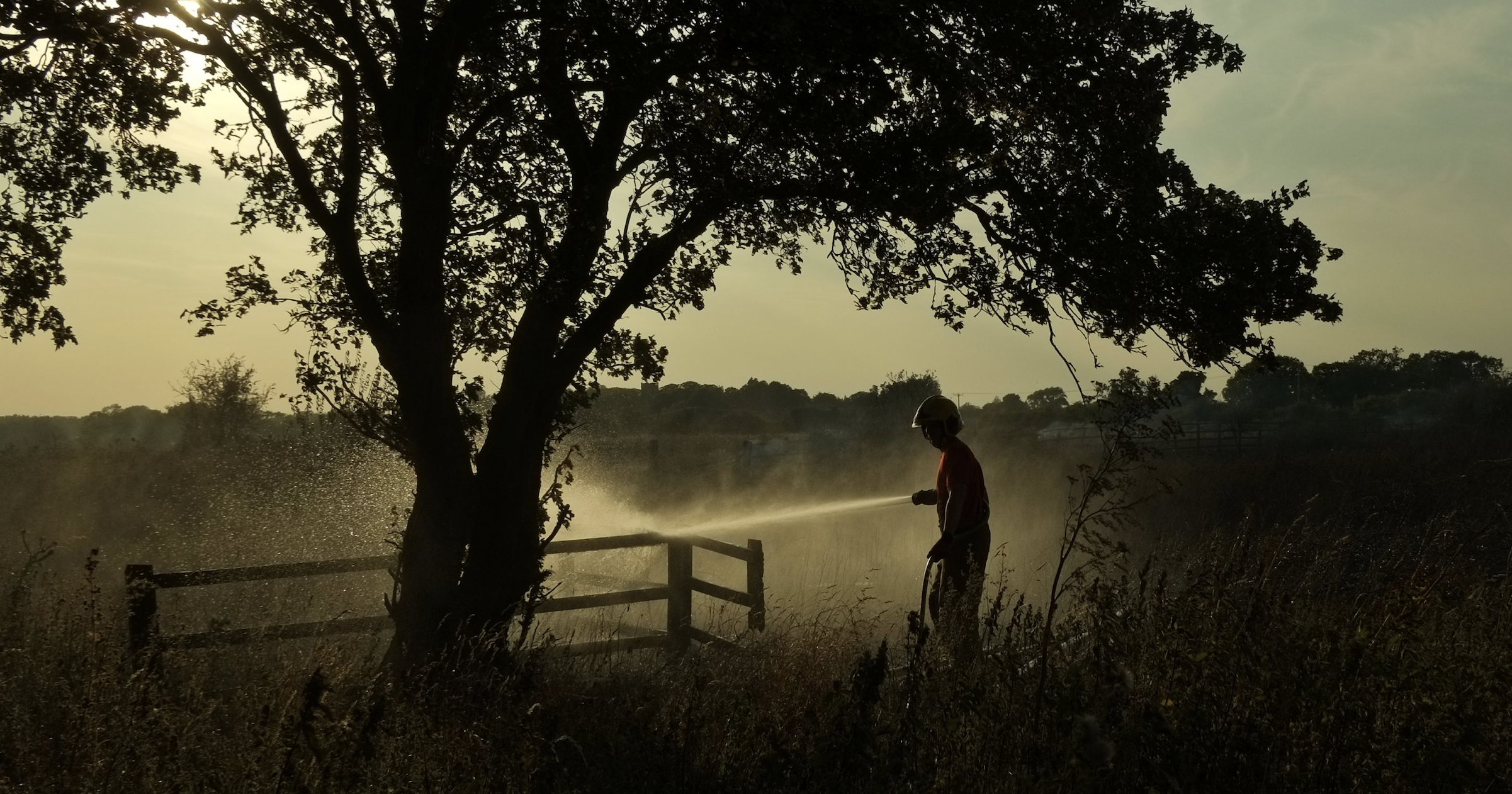
Dampening down at Blackborough End
"There are many problems with wildfires, but one is the duration of them. We also recently had one at Shouldham Warren, that ended up being nearly a week of deployment," continues Paul.
"We were calling on crews from all over Norfolk, just to keep applying water on the scene. It was in woodland, so it was very difficult to get access, and there were two fires very close to each other.
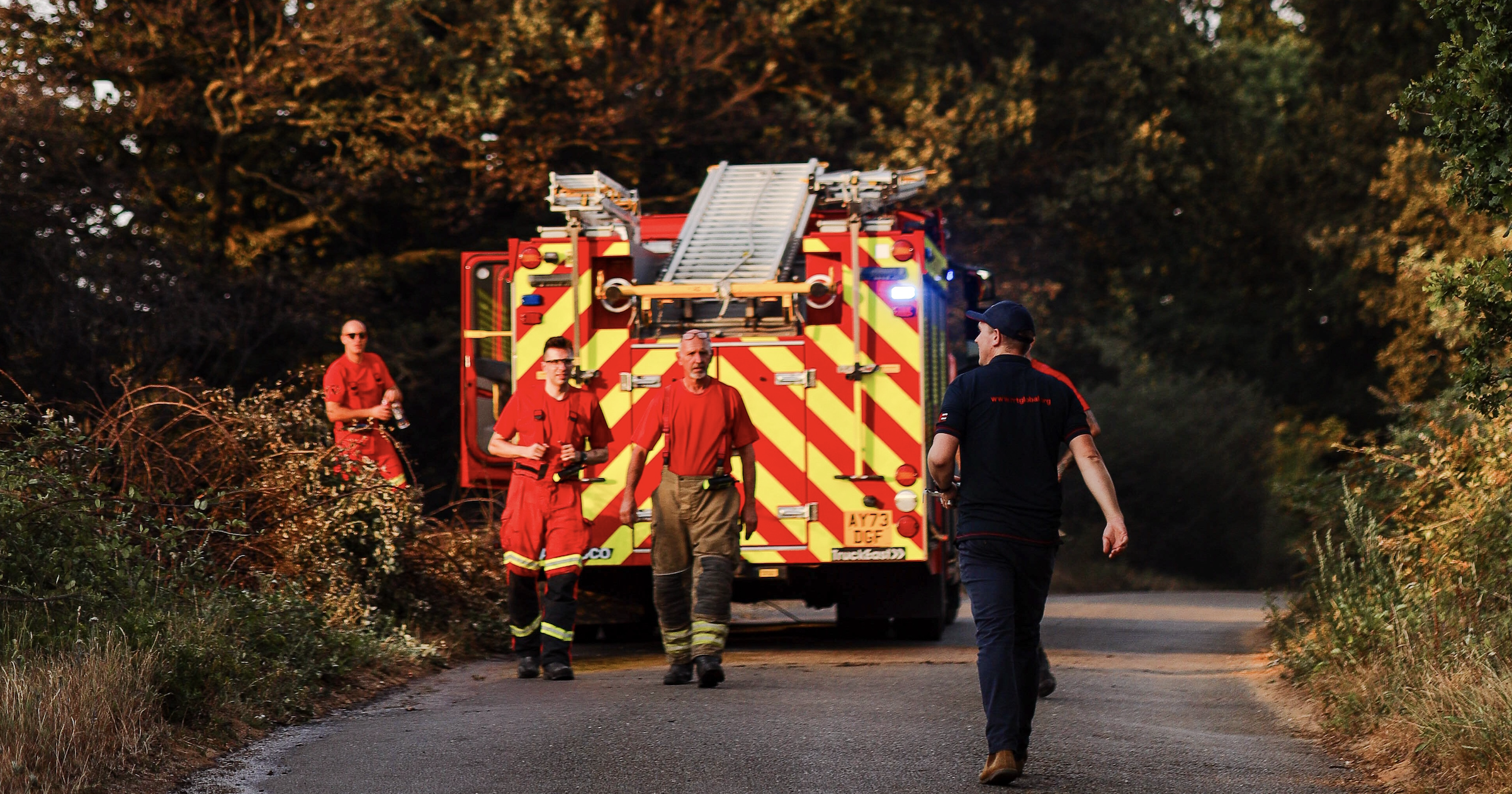
"We try to give the crew relief periods, but whilst we are doing that and there are other incidents going on, it means that sometimes we're only giving them the minimal amount of break, before we're calling on their resources again."
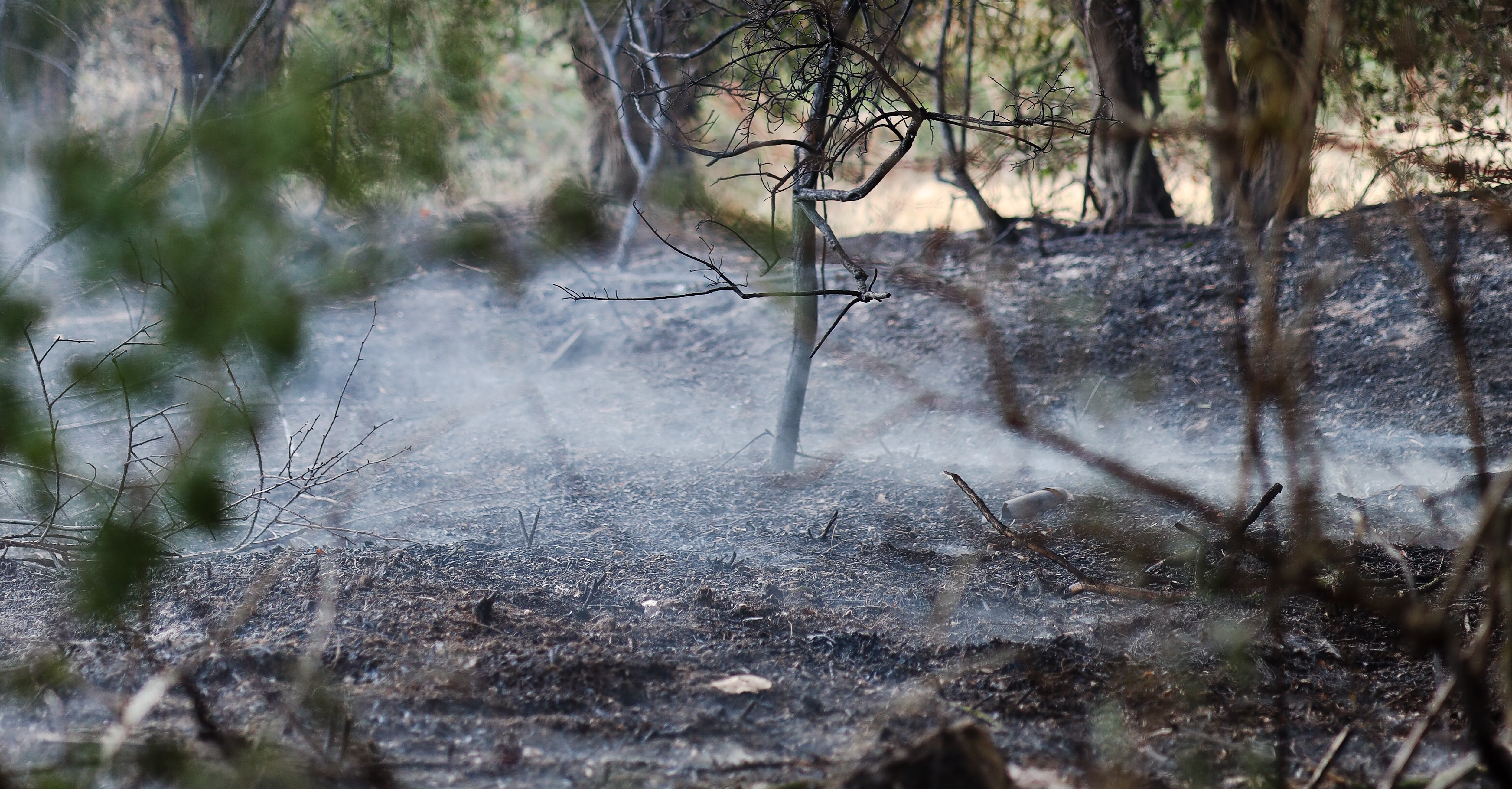
Image NFRS
This summer the fire service asked for our help, our vigilance. The government issued an emergency text alert, urging against any activities that could start a blaze - such as the use of disposable barbecues - saying resources were 'stretched to the very limit'.
"We would expect a certain amount of field fires, standing crop, because that happens when the farmers go out to harvest. But what we've seen is an increase of other fires," Paul goes on to tell me.
"Some of that is natural, things like broken glass refracting the sun. But some of it can also be carelessness, people just not putting thought into what they're doing.
"We went to some incidents where people were just having a fire in their backyard garden, burning off waste or whatever, and that then spread, because the conditions were so dry."
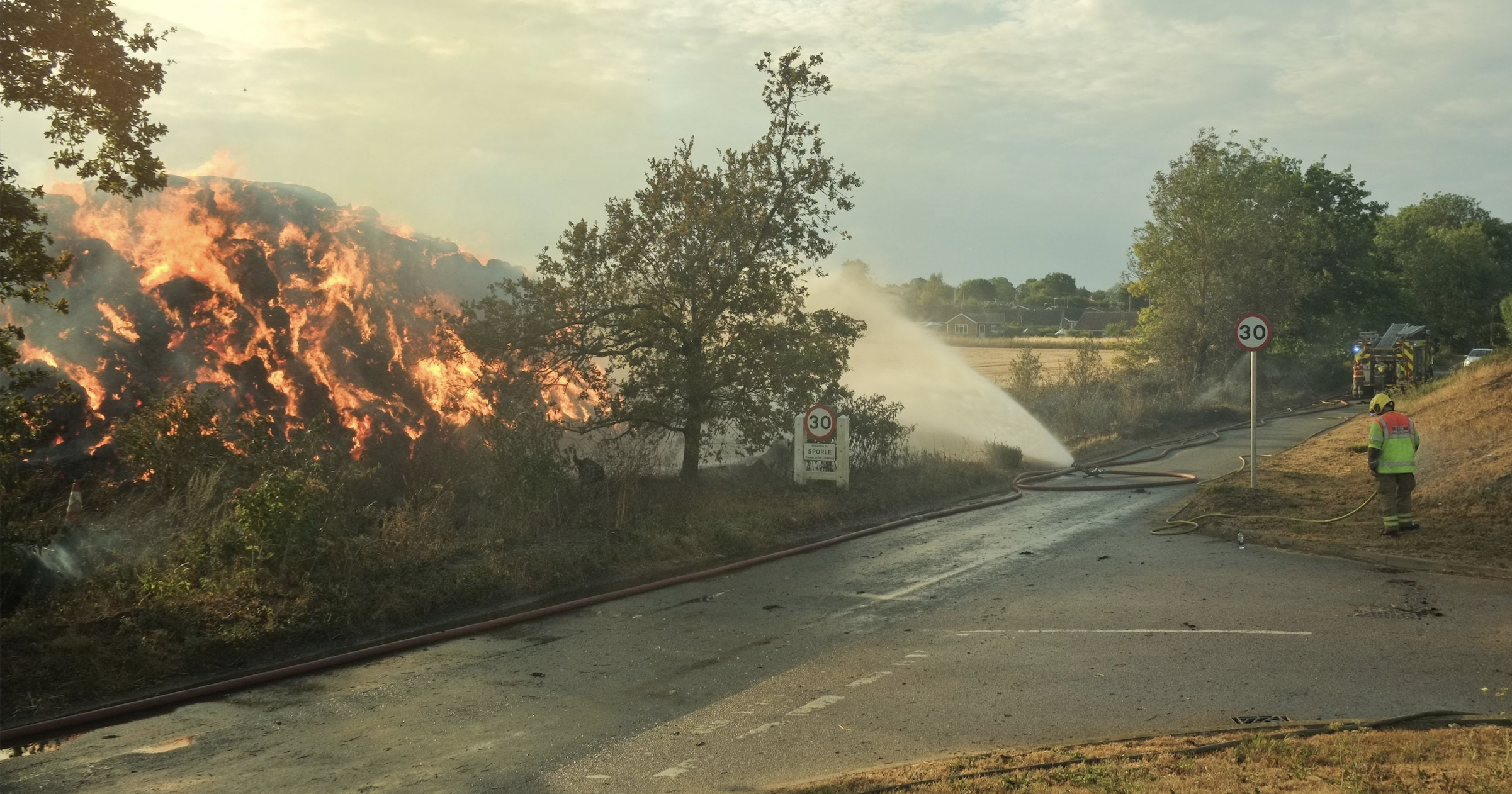
With climate experts predicting heatwaves will continue to worsen, becoming significantly more frequent, intense, and long-lasting - the pressures on the fire service will only increase.
"We've had hot summers in the past, but we probably haven't gone that long without any rain.
"And obviously when the ground is getting that warm, and everything is getting that dry, then it does become an issue as everything will catch fire much, much quicker.
"If it is the new normal, then obviously I think from a funding point of view we need to be looking at more resources going into the fire service."
All images NFRS